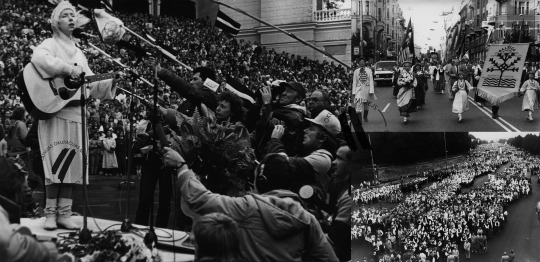
From 1987 to 1991, the people of Estonia fought for their freedom. By singing. Yes, you read that right: crowds of people, hundreds of thousands large, would gather and sing patriotic songs to show their desire for independence. Even the Soviets couldn’t figure out how to arrest them for just…singing. It started spontaneously. Five patriotic Estonian songs were played during the Tartu Pop Music Festival in May 1988, and people linked their hands and started singing along. In June another music festival decided to play patriotic songs after the official part of the festival. And a movement slowly began to gain momentum.
Unarmed people facing down tanks; people singing forbidden songs under the eyes of Soviet authorities; incredibly clever parliamentary and street theater maneuvers that vexed Moscow at every turn. By the way, one of those parliamentary maneuvers included working within the Soviet system to officially make the hammer and sickle an illegal symbol in Estonia, implemented while still occupied by the Soviet Union! In 1991, Estonia’s legislatures declared a legally an independent country and a last-ditch coup attempt by Soviet hardliners was stopped. The singers had freed themselves.
AHHAA teaduskeskus (AHHAA Science Center) is located in Tartu and is currently the biggest science museum in the Baltic countries. The project for such a museum was created in 1997 but the museum was actually opened years later and moved to it’s current building in 2011.
The museum’s main goal is to introduce people to science through fun activities. Almost all museum’s exhibits are interactive. There are also a planetarium and a 4D cinema.
The museum is a fun place to visit with the whole family!
Lennusadam(Seaplane Harbour) is located in the old seaplane hangar in Tallinn. The museum was opened in 2012.
Some of the most awesome exhibits of the museum include a century-old icebreaker Suur Tõll, a submarine called Lembit and the remains of the oldest ship found in Estonia.
There are also plenty of interactive exhibits, so it’s the perfect place to visit with small children!
official-estonia: Cover of first Pernu Postimees on 5th June 1857, where Jannsen greeted Estonians with following words: «Terre, armas Eesti rahwas! Minna, Perno Postimees, Kulutama ollen wahwas Keik, mis sünnib ilma sees,»
Haabersti manor has been part of Tallinn for centuries. The manors main building was built in the second half of the 19th century.
Both the main building as well as workers houses were in the ruins until 2001, then they were demolished. Currently there are only few trees left from the manor garden.
You can turn every word into a slang word. Remember that.
Take an English word and use it in a sentence instead of the Estonian word. Or add an Estonian ending to it. Or take the English word and just change it until nobody can understand it anymore. Also, when writing, add Ä Ö Ü Õ everywhere and you’re good to go.
official-estonia: Jaan Künnap on top of Lenin Peak in 1989, waving then illegal flag of Estonia in a show of defiance against Soviet Union. This was the first time Estonian flag reached higher than 7000 m. Source: official-estonia
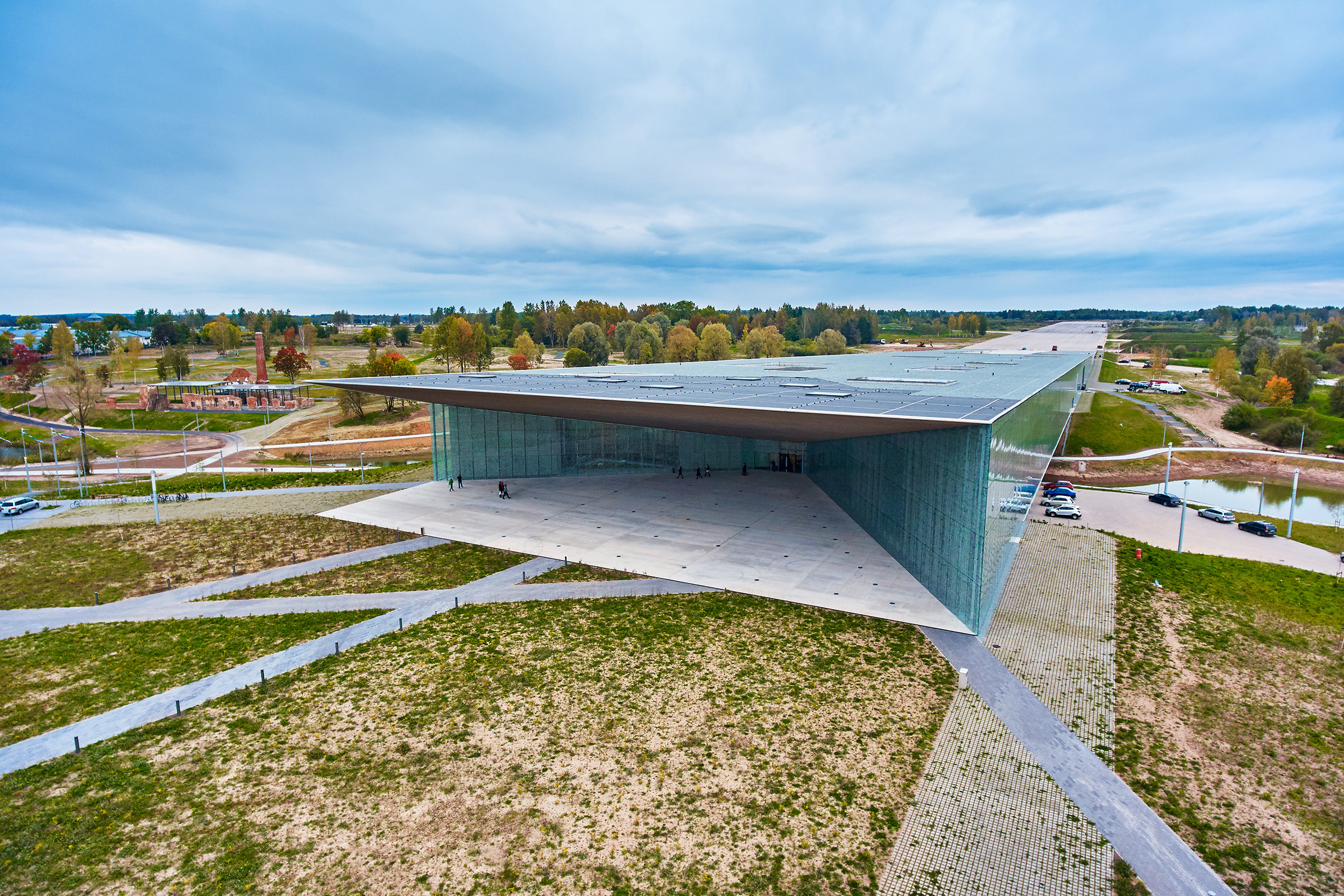
ERM(Estonian National Museum) is a museum that introduces the Estonian (and Finno-Ugric) language, culture and history. The museum owns huge collections of old photos, films and items of clothing, most of which are also on display.
ERM was originally founded back in 1909, making it one of the oldest museums in Estonia that is still open to this day. One of the founders was Oskar Kallas.
The museum is located in Tartu and has historically always been in Tartu. Nowadays, ERM (including the collections) is in a new building, near the ruins of the mansion where the museum originally used to be.
The museum is probably not the best place to visit with small children, as it is quite big. It’s around 3km away from the town centre, hiring a taxi or using a car to get there is recommended, the bus service isn’t even nearly as good as it should be.


 Seekesotsibteadmist