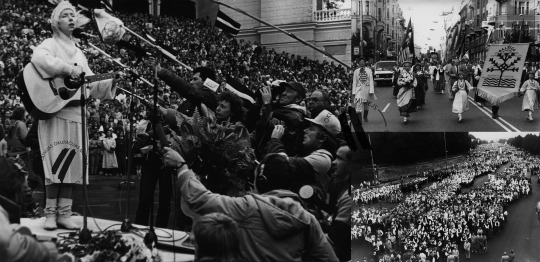
From 1987 to 1991, the people of Estonia fought for their freedom. By singing. Yes, you read that right: crowds of people, hundreds of thousands large, would gather and sing patriotic songs to show their desire for independence. Even the Soviets couldn’t figure out how to arrest them for just…singing. It started spontaneously. Five patriotic Estonian songs were played during the Tartu Pop Music Festival in May 1988, and people linked their hands and started singing along. In June another music festival decided to play patriotic songs after the official part of the festival. And a movement slowly began to gain momentum.
Unarmed people facing down tanks; people singing forbidden songs under the eyes of Soviet authorities; incredibly clever parliamentary and street theater maneuvers that vexed Moscow at every turn. By the way, one of those parliamentary maneuvers included working within the Soviet system to officially make the hammer and sickle an illegal symbol in Estonia, implemented while still occupied by the Soviet Union! In 1991, Estonia’s legislatures declared a legally an independent country and a last-ditch coup attempt by Soviet hardliners was stopped. The singers had freed themselves.
 Seekesotsibteadmist